
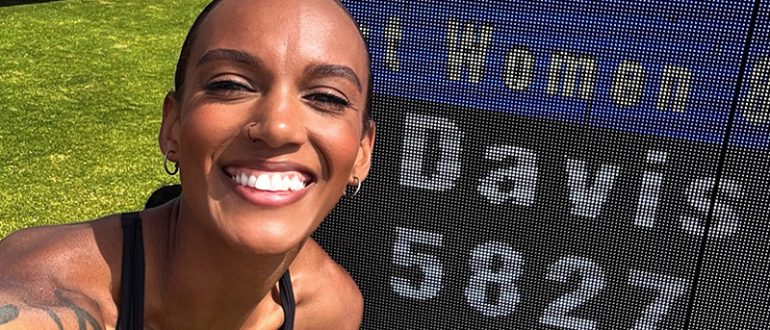

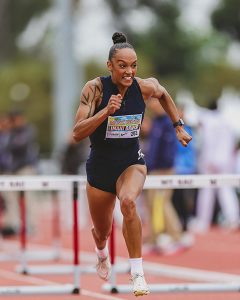
 After my first professional (indoor) track and field season in 2018, just completing college (Dec 2017), I slipped in ice and my head hit a concrete ramp leaving a basketball game. What started off as embarrassment, I tried to giggle it off, but realized my balance was compromised when I fell again walking to my car. When I got to my car, I realized I didn’t remember how to drive, so I called a friend, who took me home and told me to go to sleep. After waking up vomiting and confused as to where I was, I ended up in the hospital, soon to find out I had a traumatic brain injury.
I woke up the next morning with slurred/slowed speech and ringing ears, which was getting progressively worse. Unable to function in regular activities, such as showering and cooking on my own, my parents put me on leave at work, and moved me home, for what we thought would be a few days to a few weeks. After months had passed, I had to say goodbye to my coach, sign off on my apartment, quit my job, and fully move home, as we realized this wasn’t going to be a short-term injury.
 There were changes in my personality, speech, hearing, and emotional regulation, as well as needing to sleep for the majority of most days. As my day-to-day functioning began to progress, I had to face the fact that I wasn’t able to move around much without motion sickness and overheating in my body temperature, so I started to realize track might not be something I would be able to return to.
With time, I was able to begin working part time, and gradually full time, and slowly began exercising. Though my speech was progressing, my hearing loss also progressed. After a full year, I had gained about 40 pounds, and lost a lot of balance/ coordination. But I decided I was going to do whatever it took to get back to track. I knew in my heart it wasn’t time to hang up my spikes. I slowly transitioned back into training and sport, throughout 2020, and made the Olympic trials finals in 2021. I came back that year and had jumped further than I jumped prior to my injury!
Though it seemed like I was progressing, the following year I started having health complications such as daily nausea, seizures, sleepwalking/disturbances, and random loss of muscle control and coordination (including peeing my pants at practice on multiple occasions). We had to reanalyze if sport was going to be beneficial to my health in the long run. I was in and out of the hospital throughout 2022-2023, working with neurologists and specialists, but I continued my training. I switched events from jumping to running to give my brain and spinal cord a rest, and have continued training to this point. I never gave up and I am currently training for the 2024 Olympic trials in hopes to compete on the Olympic team!
UPDATE: Kiana is this year’s Honorary Chair for the SDBIF Friendraiser. So, if you would like to meet her in person, please join us on September 20 at the Admiral Baker Club House for an inspirational evening surrounded by friends of brain injury recovery!
Follow Kiana on Instagram: @kiana_imani
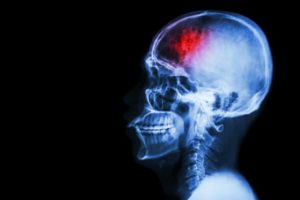 When a person has a stroke, blood flow to the brain is interrupted, causing brain cells to die within minutes due to lack of oxygen. In some cases, this can result in paralysis, speech and language problems, vision problems, and memory loss. But in a new study, researchers have shown that stem cell therapy increases nerve cell production in mice with brain damage due to stroke.